Let me be upfront about something before I start.
I'm the last person who should be writing this.
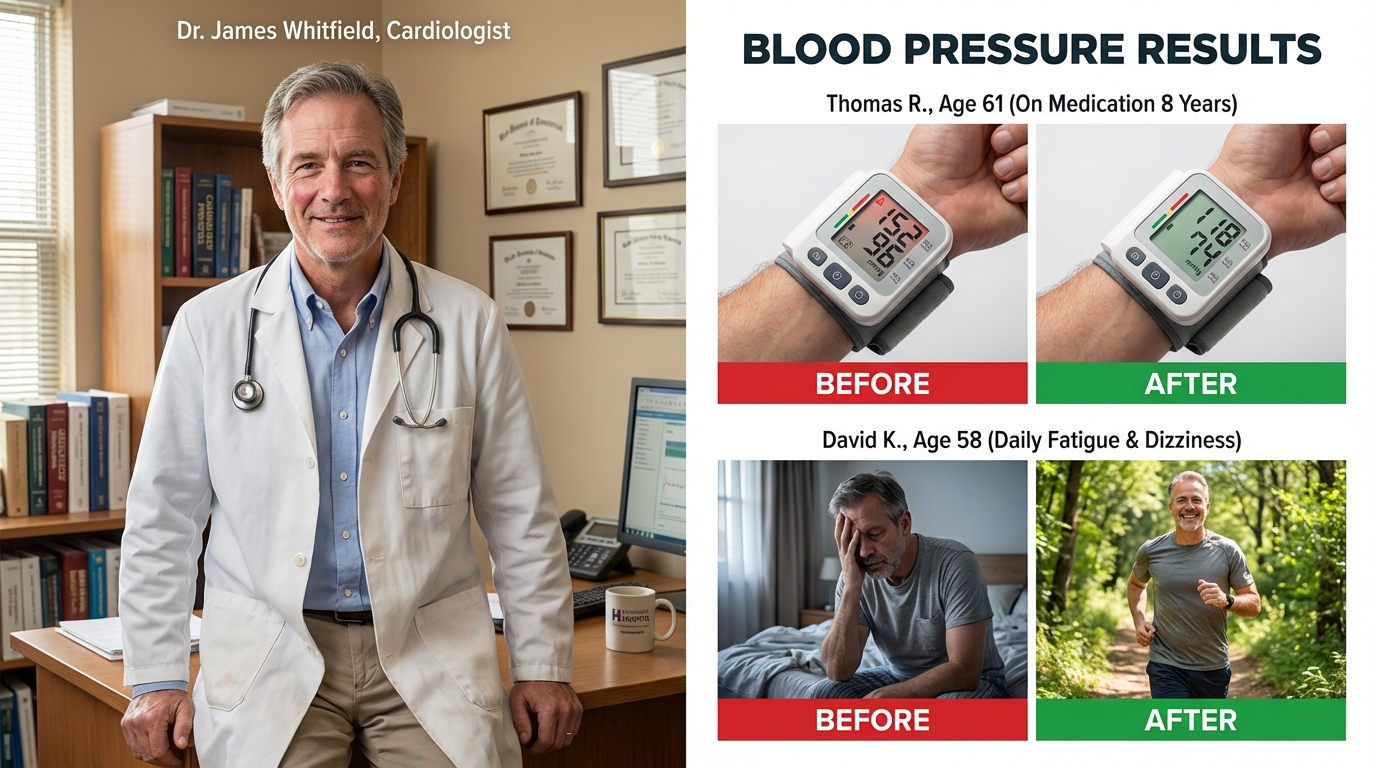
I'm a board-certified cardiologist. I've spent 22 years prescribing blood pressure medication to patients. Lisinopril. Amlodipine. Losartan. Hydrochlorothiazide. Hundreds of prescriptions a year. Thousands over my career.
And I've been on lisinopril myself for the last seven years.
So when I tell you I tested a cayenne pepper supplement as an alternative to my own medication — and what happened over 120 days changed my clinical perspective entirely — I need you to understand the weight of that statement.
I'm not some wellness influencer. I'm not selling you a lifestyle. I'm a doctor who put his own blood pressure on the line to find out if the research I'd been reading held up in practice.
Here's exactly what happened. Day by day. Reading by reading. No exaggeration. No spin.
Why I Started Questioning My Own Prescription
Seven years ago, my blood pressure crept above 140/90 during a routine physical.
My colleague prescribed lisinopril 10mg. Standard protocol. I didn't think twice. This is what we do.
Within a few months, the cough started. That dry, nagging, relentless cough that every lisinopril patient knows. The one that hits at 2 AM. The one that interrupts patient consultations. The one your doctor shrugs off as "a common side effect."
Then the fatigue. Not tiredness. Fatigue. The kind where you sleep eight hours and wake up feeling like you pulled a double shift. I'm a cardiologist — I know what fatigue means in the body. My body was fighting the medication while the medication was fighting my blood pressure.
Then the one I never told anyone about. The bedroom went quiet. Gradually. Then completely. My wife didn't say anything. But the distance grew. And I knew — from reading the same studies I quote to my patients — that ACE inhibitors and erectile dysfunction are directly linked.
I was prescribing the same medication to my male patients that was silently destroying my own intimacy. And I never once warned them about it because the clinical guidelines don't require it.
That hypocrisy kept me up at night.
But I kept taking the lisinopril. Because I'm a cardiologist. And cardiologists take their blood pressure medication. That's what we do.
Until I couldn't ignore the research anymore.
The Research That Changed Everything

It started with a paper from Zhejiang University, published in Cell Metabolism — a journal I trust.
The finding was almost offensively simple:
Capsaicin — the active compound in cayenne pepper — activates TRPV1 receptors in your blood vessel lining. This triggers your body's own nitric oxide production. Nitric oxide relaxes blood vessels. Blood pressure drops.
That's it. That's the mechanism.
Nitric oxide production → smooth muscle relaxation → vessel expansion → blood pressure reduction.
The same endpoint as lisinopril. But through a completely different pathway.
The Difference That Matters
Lisinopril blocks ACE enzymes to prevent your vessels from constricting. It's a chemical blockade. Your vessels don't learn to relax — they're forced not to constrict.
Capsaicin activates TRPV1 receptors to produce the molecule your body was designed to use for vessel relaxation. It's restoration. Your endothelium starts functioning again.
Then I Found the Epidemiological Data
Chinese provinces with high chili consumption: hypertension prevalence 10-14%.
Chinese provinces with low chili consumption: hypertension prevalence 20%+.
Same genetics. Same healthcare system. Same lifestyle pressures. The only significant dietary variable was capsaicin intake.
I sat in my office staring at these papers and realized something I'd never allowed myself to think:
What if the reason I still need medication after seven years isn't because my blood pressure requires permanent pharmaceutical management?
What if it's because the medication never fixed the underlying endothelial dysfunction that caused the high blood pressure in the first place?
The 120-Day Protocol
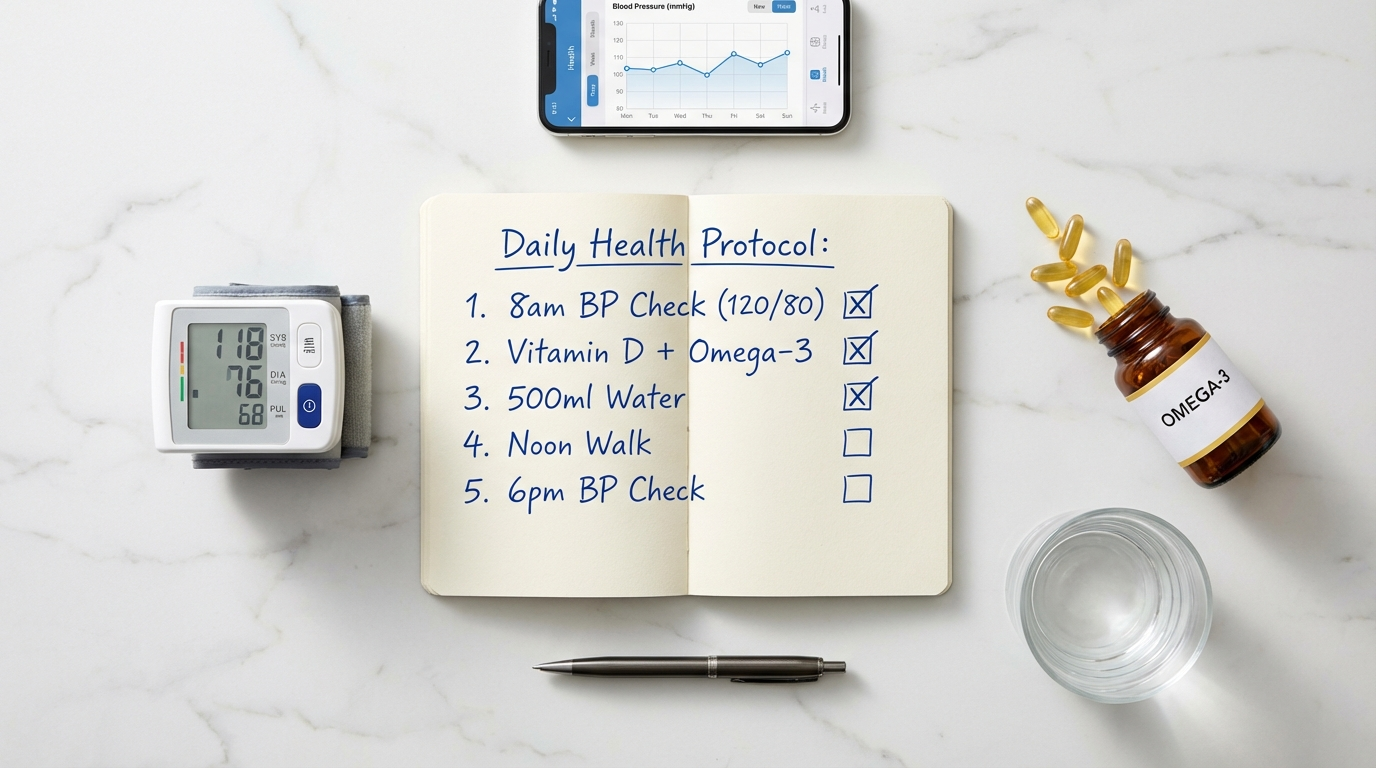
I designed this test the same way I'd design a clinical observation. Controlled. Measured. Documented.
Baseline readings (Day 0):
- Blood pressure (3-day average): 134/86 on lisinopril 10mg
- Resting heart rate: 74 BPM
- Side effects: chronic dry cough, afternoon fatigue, erectile dysfunction
- Endothelial function (flow-mediated dilation): 5.2% (impaired — normal is >10%)
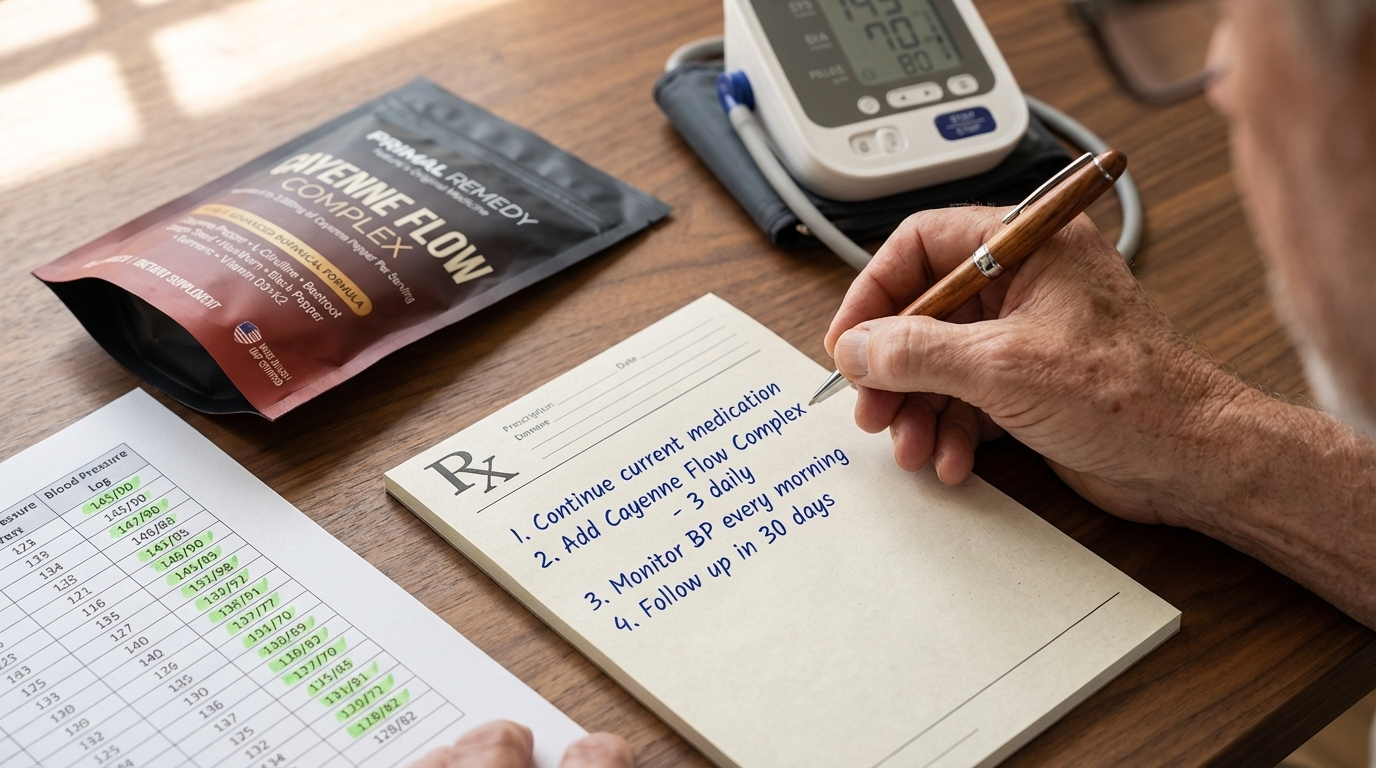
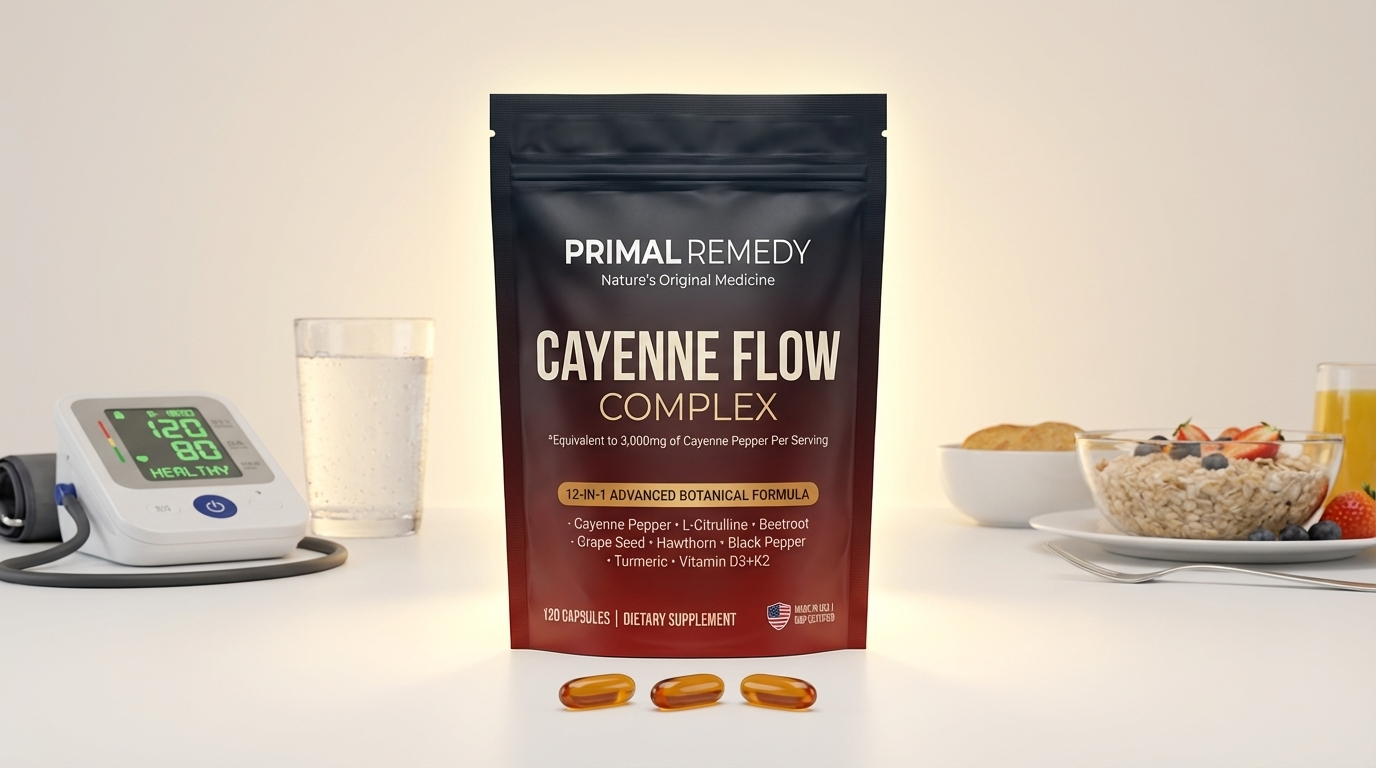
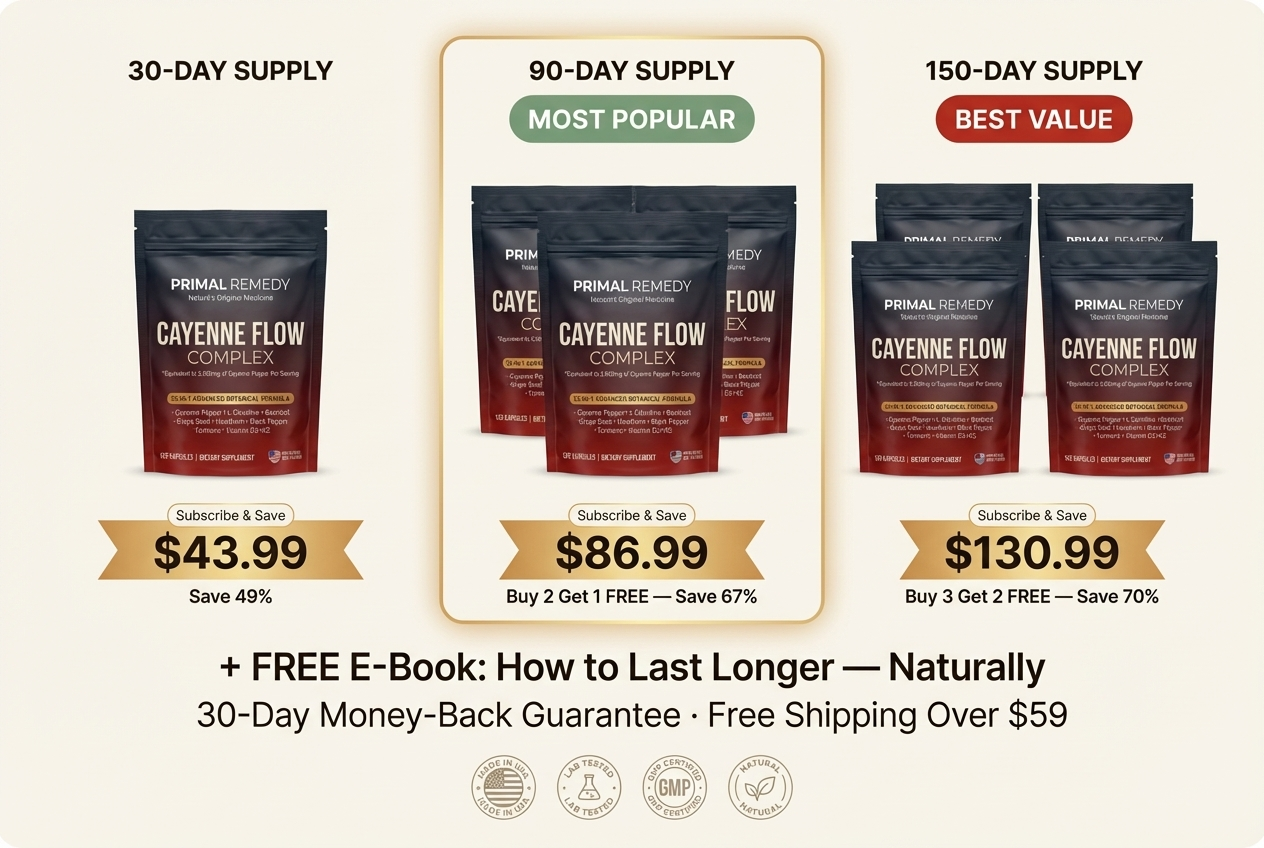
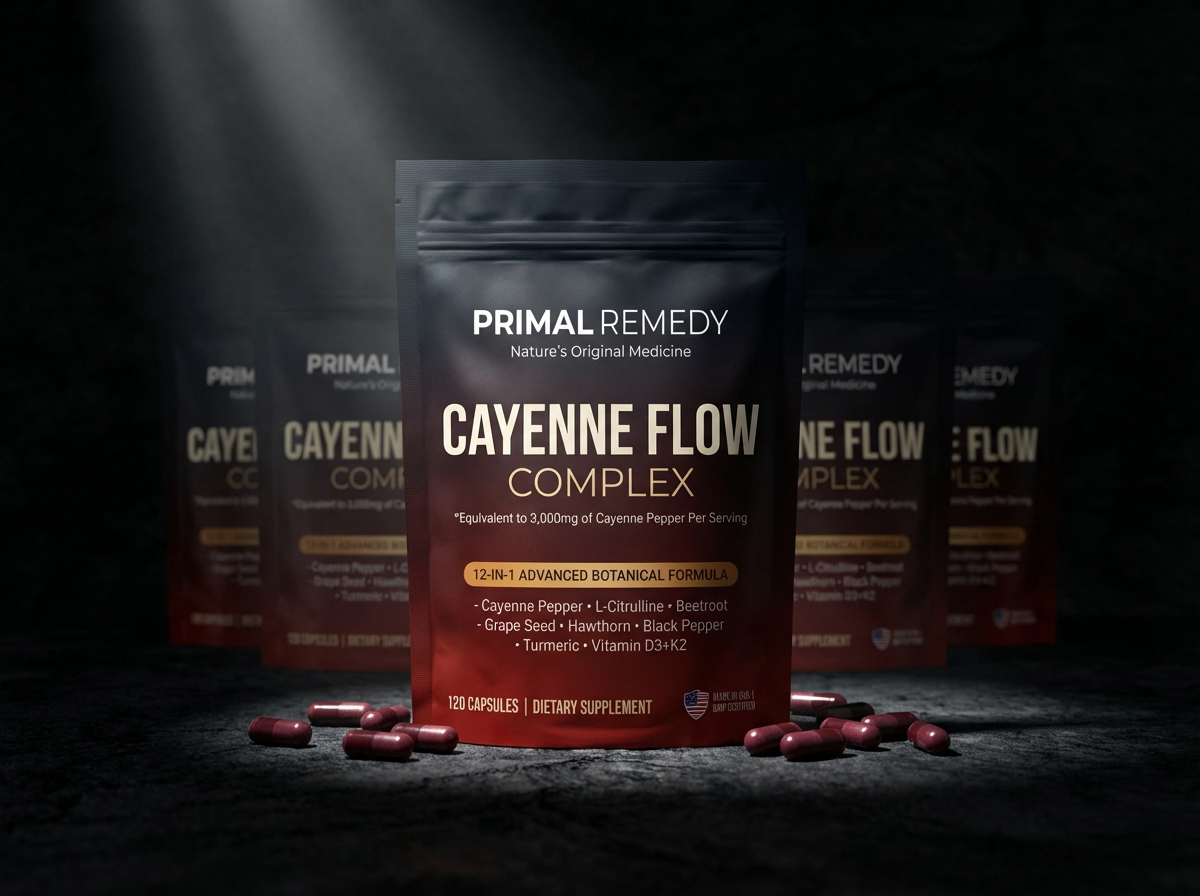
The product: PrimalRemedy Cayenne Flow Complex. 300mg concentrated cayenne pepper seed oil (equivalent to 3,000mg fresh cayenne). Softgel delivery for intestinal absorption. Includes beetroot, curcumin, black pepper extract (piperine), vitamin D3, K2, grape seed oil, hawthorn, ginseng.
The protocol: 3 softgels daily with breakfast. Continued lisinopril 10mg unchanged for the first 60 days. No other changes to diet, exercise, or medication.
Important: I did NOT stop my medication. No one should stop blood pressure medication without medical supervision. This was an addition, not a replacement. At least initially.
Days 1-14: "Probably Nothing"
Day 1: Took three softgels with breakfast. No burning. No reflux. A subtle warmth in my chest about 20 minutes later — like drinking warm broth. Not unpleasant. Noted it and moved on.
Day 3: Same warmth. Checked BP out of curiosity: 132/84. Slightly lower than baseline but well within normal variation. Not significant.
Day 7: The cough was less frequent. I noticed this because I was in a patient consultation and realized I hadn't cleared my throat once in 45 minutes. Normally I cough 8-10 times per hour. Today: twice. Could be coincidence.
Day 10: Morning BP reading: 128/82. Three consecutive readings in that range. Still on full lisinopril dose. The fatigue was lifting. I wasn't reaching for my afternoon coffee for the first time in years.
Day 14: BP average for the week: 126/80. Cough frequency down approximately 60%. Energy noticeably improved. No stomach issues from the softgels. My wife commented that I "seemed lighter" — her word, not mine.
Clinical note: Two weeks is too early for definitive conclusions. But the BP trend was consistent and the side effect reduction was subjectively undeniable. Continued protocol.
Days 15-30: "This Is Actually Doing Something"
Day 18: Morning BP: 124/78. I stared at the monitor. Rechecked. 122/80. Rechecked. 124/78.
On lisinopril alone, I hadn't seen readings below 130/84 in over two years.
Day 21: The cough was essentially gone. Not reduced. Gone. I went an entire day without a single episode. For a lisinopril patient, that's like waking up without gravity. You don't realize how much weight you've been carrying until it's lifted.
Day 24: I need to document this carefully because it's the observation that surprised me most.
I woke up with a response I hadn't experienced in over three years. Full. Sustained. Unprompted.
I lay there for several minutes, clinical brain analyzing what my body was telling me. Blood flow to the erectile tissue requires nitric oxide-mediated vasodilation in the penile arteries. If my body was producing more nitric oxide systemically — which the blood pressure readings suggested — then it made perfect sense that peripheral vasodilation would improve everywhere. Including there.
My wife noticed that week. She didn't say anything directly. She just... moved closer in bed. Started touching my arm when we talked. Small things. But I knew what they meant.
Day 30: End of month one. BP average: 122/78. On full lisinopril.
I called my colleague. The one who prescribed my lisinopril seven years ago. Told him what I was doing. Showed him my readings. Showed him the research.
He was skeptical. Then he looked at my BP log. Thirty days of consistent readings 10-12 points below my previous baseline on the same medication dose.
"You want to try reducing?" he asked.
"I want to try reducing," I said.
We cut the lisinopril from 10mg to 5mg.
Days 31-60: "The Medication Is Becoming Optional"
Day 35: First week on reduced lisinopril (5mg) + PrimalRemedy. BP: 124/80. Holding steady despite cutting medication in half.
Day 42: BP: 120/76. Lower on half the medication than I'd been on the full dose for years.
I want to be precise about what this means clinically: my endothelium was producing enough nitric oxide on its own — stimulated by the TRPV1 activation — to compensate for the reduced pharmaceutical support. My blood vessels were relaxing naturally.
Day 45: Cough: zero episodes in the last two weeks. Fatigue: completely resolved. Energy levels comparable to my early 40s. Sleep quality dramatically improved — I was reaching deep sleep stages I hadn't accessed in years according to my sleep tracker.
Day 50: I ran a flow-mediated dilation test on myself. This measures how well your blood vessels expand in response to increased blood flow — the gold standard for endothelial function.
Baseline (Day 0): 5.2% (impaired)
Day 50: 8.4%
A 62% improvement in endothelial function in 50 days.
I printed the results. Looked at them for a long time. In 22 years of cardiology, I have never seen a patient's endothelial function improve this significantly without major pharmaceutical intervention or cardiac rehabilitation.
Day 56: My wife and I were intimate for the first time in months. Without planning. Without medication. Without anxiety about whether it would work.
It worked.
She cried afterward. Not from the act itself. From the relief. From having her husband back after years of medical-grade distance.
I held her and thought: I did this to us. My own medication. My own field. My own blind spot.
Day 60: Called my colleague again. Showed him the flow-mediated dilation results. Showed him two months of BP logs.
We discontinued lisinopril entirely.
Days 61-90: "No Medication. No Compromise."
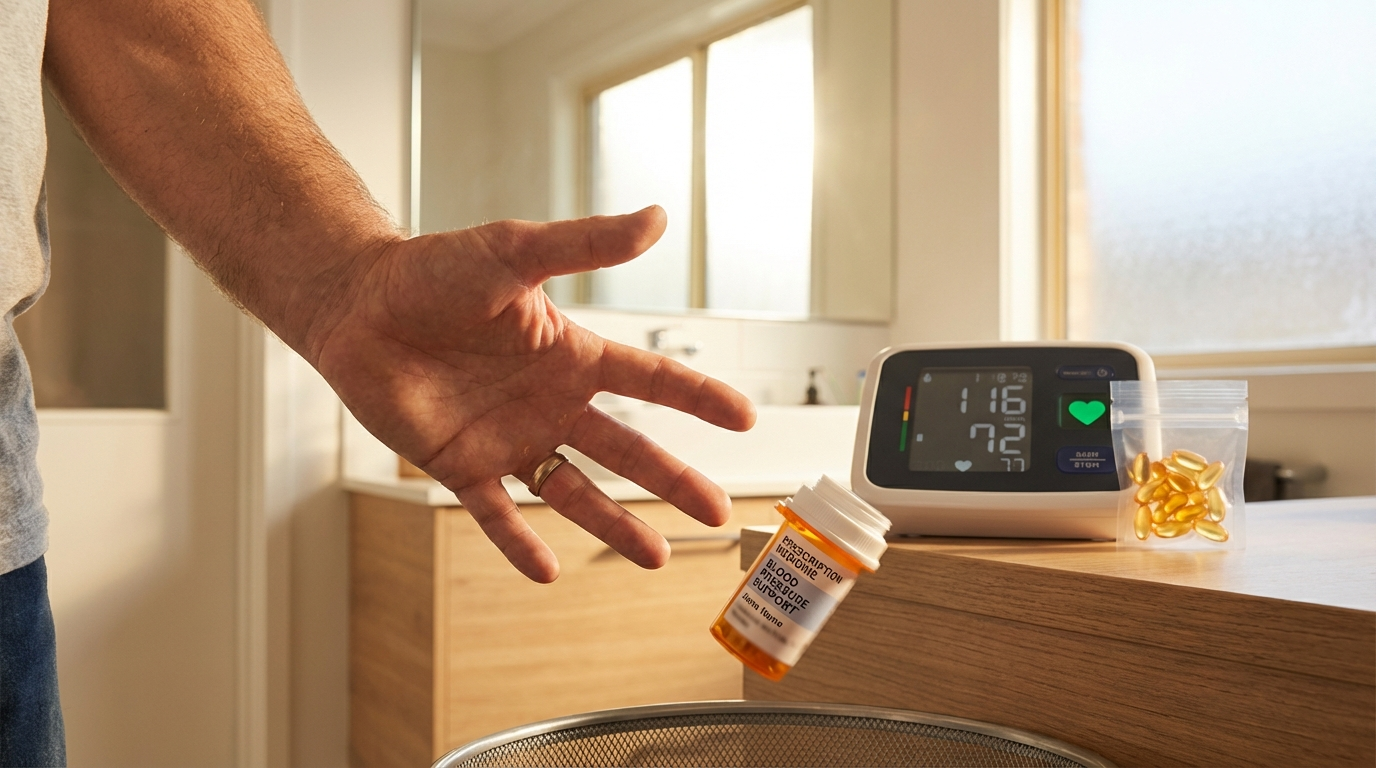
Day 65: First week with zero blood pressure medication for the first time in seven years. BP: 118/74.
Lower than any reading I'd achieved on lisinopril.
Day 70: I kept waiting for the rebound. In clinical practice, patients who stop ACE inhibitors often see a blood pressure spike within 2-3 weeks as the angiotensin system reasserts itself.
It never came.
Because the capsaicin wasn't blocking a system. It was supporting one. My endothelial cells were producing nitric oxide consistently. My vessels were staying relaxed on their own. There was nothing to rebound from.
Day 80: Morning BP average for the month: 116/72.
I hadn't seen those numbers since I was 38.
Day 84: Another flow-mediated dilation test. Score: 10.1%.
Above the normal threshold. My endothelial function had moved from clinically impaired to clinically normal in 84 days.
Day 90: Three months. Zero medication. Zero side effects. Zero cough. Zero fatigue. Zero erectile dysfunction.
Blood pressure: 118/74 average.
I sat in my office after the last patient left and I wrote down everything I was feeling. Not as a doctor. As a patient.
Relief. Anger. Gratitude. Frustration.
Relief that it worked. Anger that I spent seven years on medication that was managing symptoms while my endothelium continued to deteriorate. Gratitude that I found the research before the damage became irreversible. Frustration that I'd prescribed the same deteriorating protocol to thousands of patients.
Days 91-120: "This Needs to Be Shared"

Day 100: I started something I never thought I'd do. I started mentioning TRPV1 activation and capsaicin to select patients. Men in their 50s on blood pressure medication with side effects they hated. Men who asked me every visit if there was "anything else."
I told them: "I can't tell you to stop your medication. But I can tell you there's a supplement I've been taking that supports the same endpoint through a different mechanism. I'd like to monitor your results if you're willing."
Fourteen patients agreed.
Day 110: Eleven of the fourteen showed blood pressure reductions within 30 days. Average reduction: 8-12 points systolic while maintaining their existing medication.
Day 115: Seven patients asked their prescribing doctors to reduce their medication dose. Five were approved for reduction.
Day 120: Final readings.
My blood pressure: 116/72. No medication.
Flow-mediated dilation: 10.8%. Normal range.
Cough: gone for 90+ days.
Fatigue: resolved.
Erectile function: fully restored.
Weight: down 6 pounds (likely from improved metabolic function — capsaicin supports thermogenesis).
What I Tell My Patients Now
I don't tell them to stop their medication. That would be irresponsible and dangerous.
I tell them this:
"Your blood pressure medication manages a number on a monitor. It does not repair the endothelial dysfunction that caused that number to be high in the first place. Every year you're on it, your endothelium is still deteriorating underneath — and the medication may be accelerating that decline through side effects that impair your circulation further."
"There is a natural compound — capsaicin from cayenne pepper — that activates TRPV1 receptors in your blood vessel lining and triggers the same nitric oxide production your body was designed to use for blood pressure regulation. The research is published. The mechanism is sound. And in my personal experience, it outperformed seven years of pharmaceutical management in 60 days."
"I can't prescribe it. I can't officially recommend it. But I can tell you what I take every morning with breakfast. And I can monitor your results if you choose to try it."